When Paul Knight addressed the National Trust election forum late last year, he encouraged a new approach when considering Aboriginal cultural heritage. As I read his words, I saw that it applied not just to Indigenous Australian cultural heritage but on thinking critically about Australian “cultural heritage” in general.
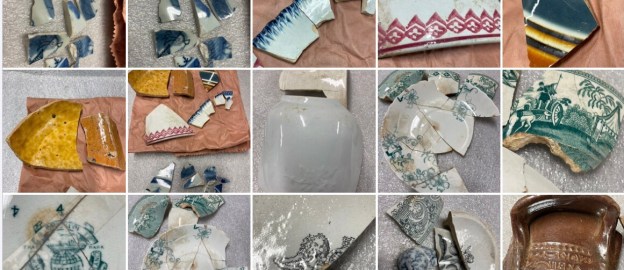
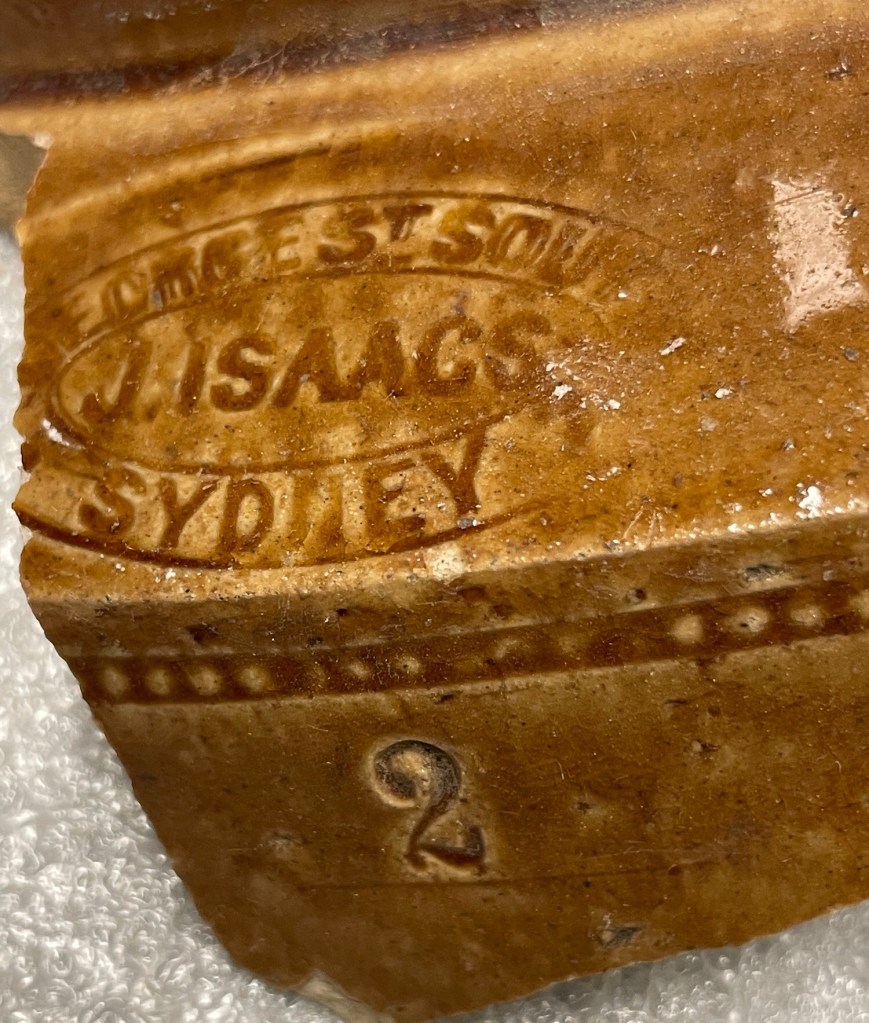
What can archaeology tell us about the past and people who used these items?
Knight states that it isn’t just the buildings and objects that matter but rather “ the stories of place, the stories of people and the relationship that we have with that place”.
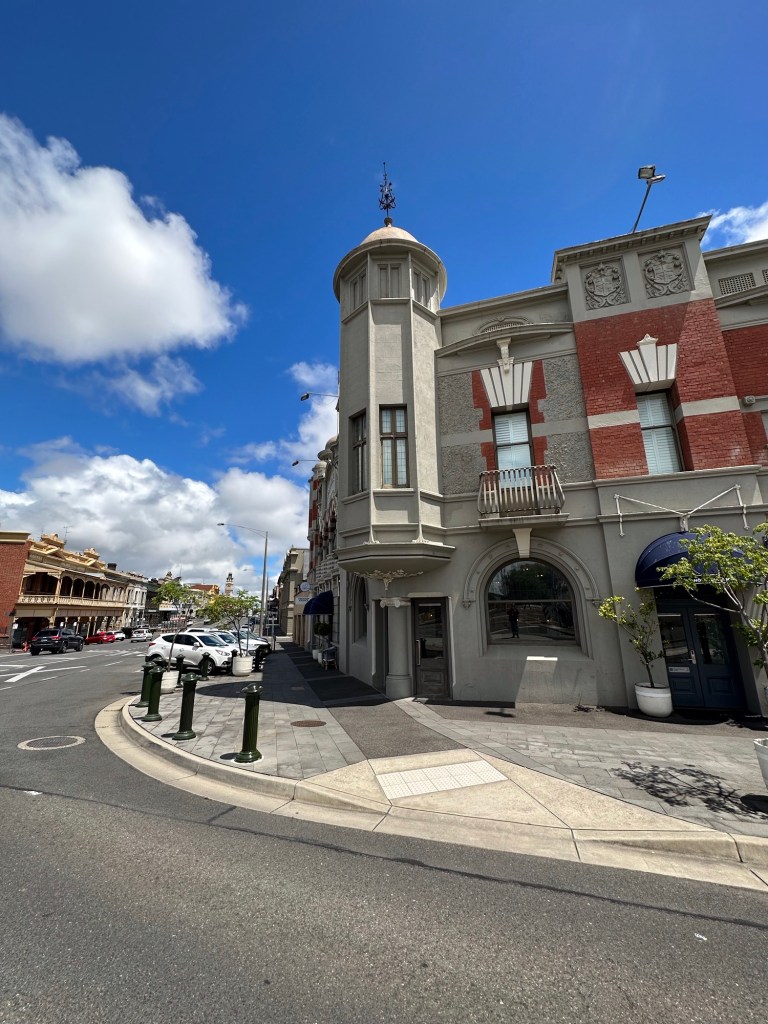
There are significant and great losses of cultural heritage from every layer of Australian history – Indigenous, Colonial and Multicultural. When you dissect the outcomes, it is so much more than just a loss of a habitat or a building or an object – it is that every single loss becomes magnified in the context of a much larger jigsaw of place and/or landscape. How does the destruction of heritage buildings or removal of a group of trees change the feel of a street or the city CBD or the suburb that we live in or indeed the landscape that they were once part of? Imagine The Rocks in Sydney CBD being flattened and replaced with high rise buildings. How much harder would it be to tell the stories of early Sydney town without its original streetscape? How wonderful it is to be able to visit the towns of Indigo Shire and Ballarat in Victoria which exhibit intact cultural heritage (houses, gardens, historic buildings) as a backdrop to the stories of Australia during the gold rush times.
The City of Ballarat, Victoria. Heyday in the 1850s from the rich alluvial gold deposits.
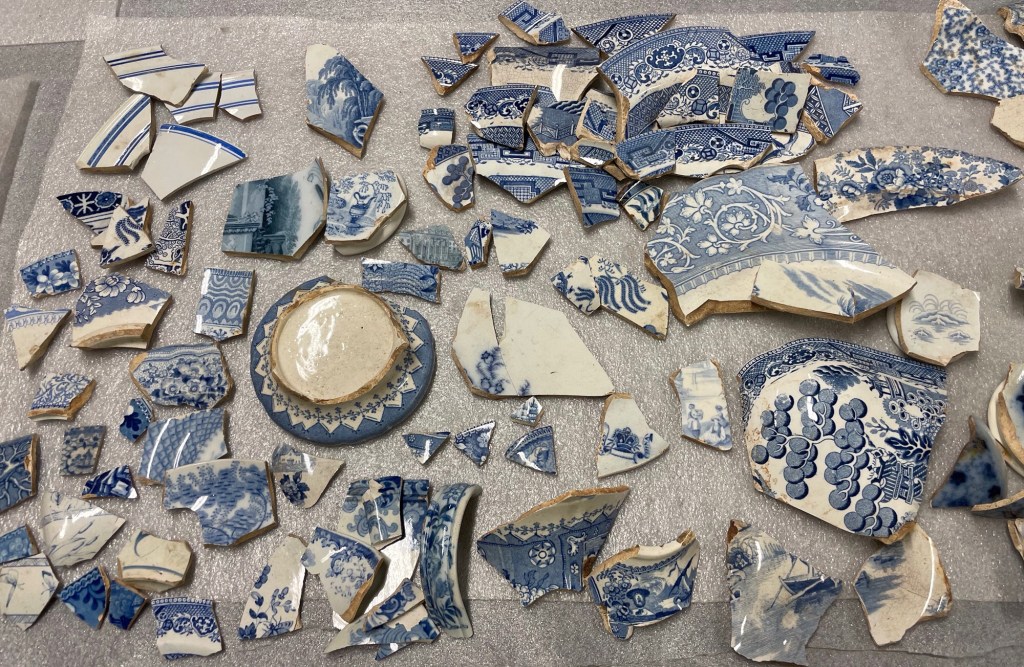
Knight talks about individual sites and their connection to the greater surrounding area and that loss of context and connection impacting upon the total heritage landscape. It’s so true. As we redevelop and clear and subdivide and dig – we permanently change not only the surface area of the landscape (whether forested or built) but the archaeological landscape below the surface. The eventual “cover up” causes irreversible damage and may include the loss of the evidence to tell “tangible” stories attached to the history of that place. Archaeological finds are so critical for research and interpretation of the past lives lived right under our feet.
So many patterns and types of blue and white ceramics from a single archaeological find in Parramatta, NSW. What story do they tell?
Indigenous Australians talk of their connection to “country” and being custodians of the land – I really get that. We need to pay attention to this way of seeing Australia – not only being connected to the landscape but to the built environment and other layers of Australian history (“warts and all”). We must all adapt to a different way of thinking – realising that we are all the caretakers of our cultural heritage and are just passing through. For future generations there needs to be stories and a connection to the past. We must ensure that we protect all the layers of cultural heritage and rethink the model of protection for individual sites and objects and assess them as part of the whole heritage landscape rather than case by case examples.
Heritage Legislation is critical in ensuring that Australians are custodians of their own history. We all need clear guidelines about the ways we can protect the past at both state level and a national level and including shipwrecks and our sunken past off the coast.
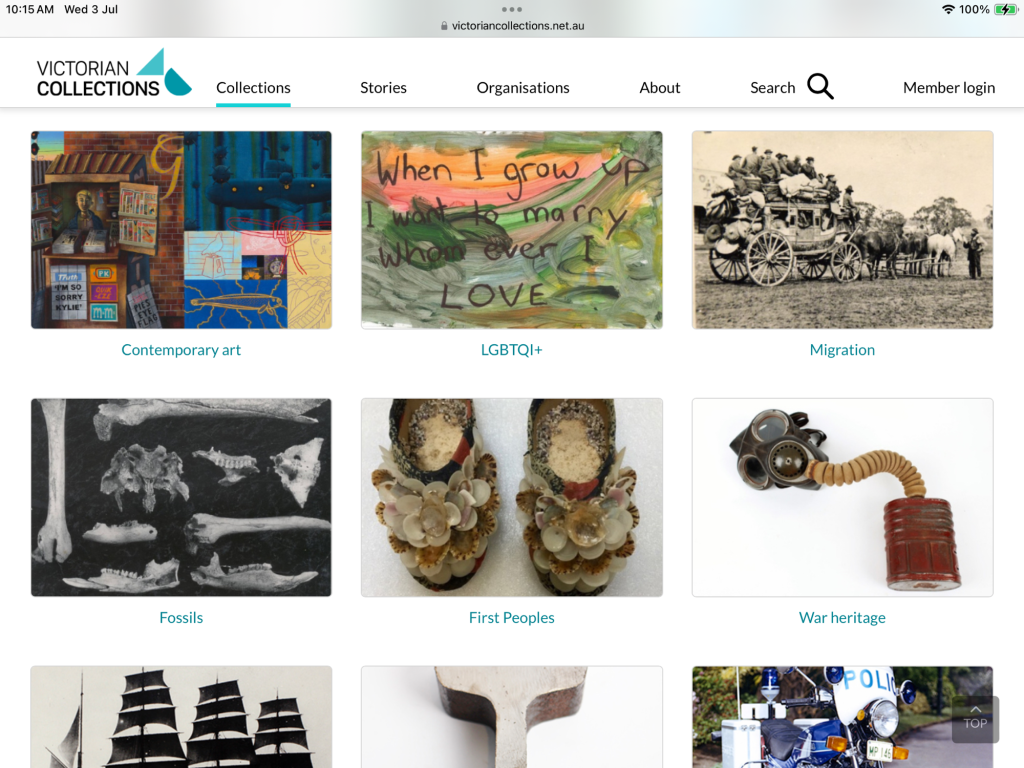
The State of Victoria has lead the way educating us about the past by building its Victorian Collections Platform – cataloguing and interpreting archaeological and heritage finds. The information is accessible to everyone online. Food for thought?
Why should cultural institutions do audience research?
Competition in the “museum world” is tough. It doesn’t matter how exclusive your collection is, or how famous your brand, there is competition from other cultural institutions, big and small, as well as any number of other distractions (sport, relaxation, leisure pursuits) competing for a share of potential visitors and even the most committed members’ valuable time. Face to face audience research into visitor experiences within the museum provides useful information that can be fed back into program development, museum policy and strategic planning for the future.
The front foyer of the newly rebranded MU-SEA-UM (Australian National Maritime Museum) at Darling Harbour
It is not enough to just happily count numbers of visitors through the door. Numbers on their own can be quite misleading without the qualitative data supporting visitor behaviour (including visitor observation and tracking – see separate post) during the visit and feedback from visitors about their personal experiences inside your cultural institution and why they may or may not come back in the future.
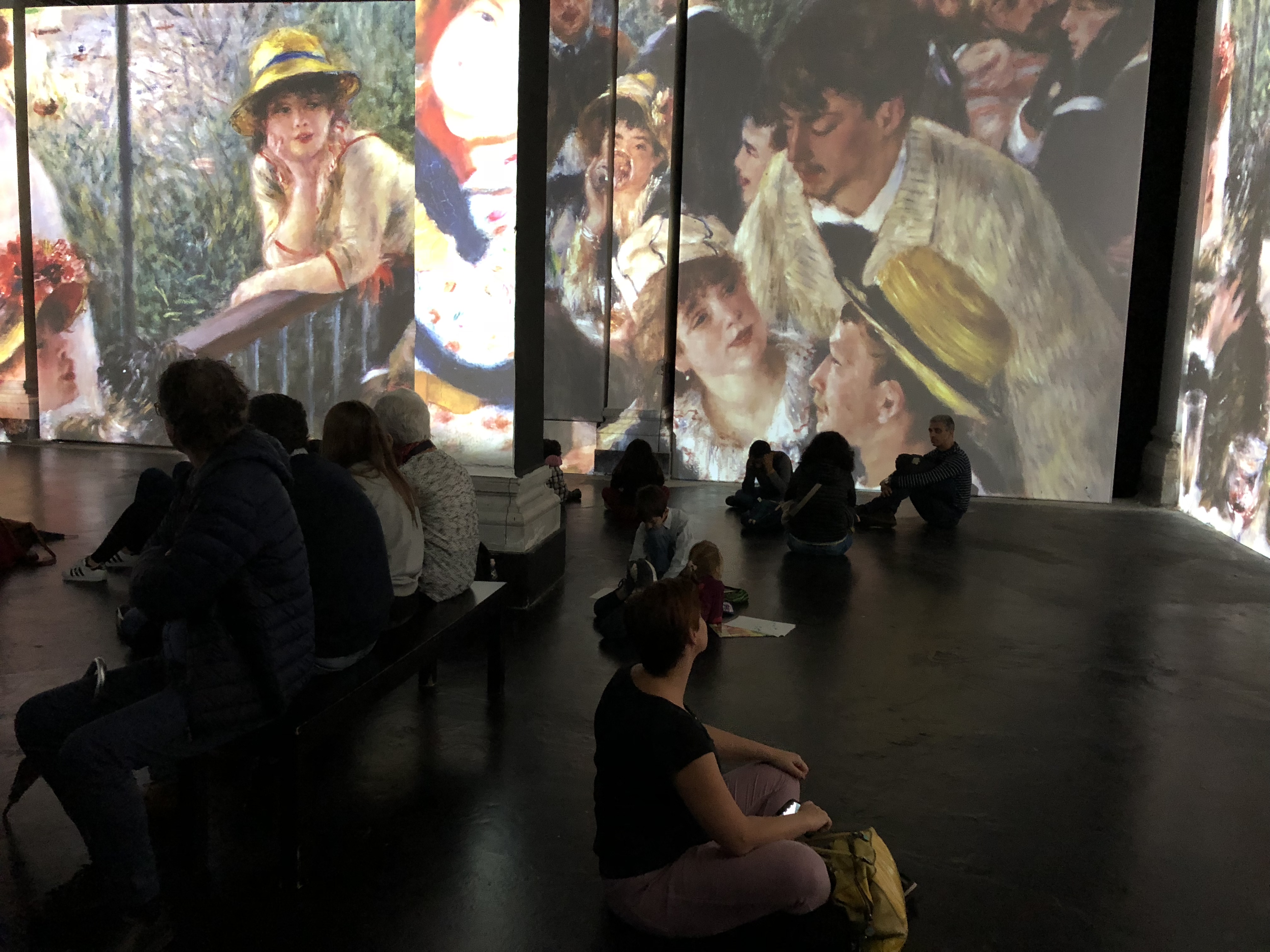
Impressionists from Monet to Cezanne at Palazzo degli Esami in Rome
Visitor Feedback Surveys
Certainly, visitor feedback is key to keeping audiences engaged with your museum and your brand. If you welcome feedback, audiences feel appreciated and valued, whether it’s about the collection, upcoming or current exhibitions, kids activities, programs, eating spaces or the state of the bathrooms!
Once you have direct communication with visitors, you can benefit enormously from their feedback (both positive and negative), but firstly, the organisation needs to be specific as possible about what it wants to know in order for the feedback to be beneficial.
Preparing your audience research objective
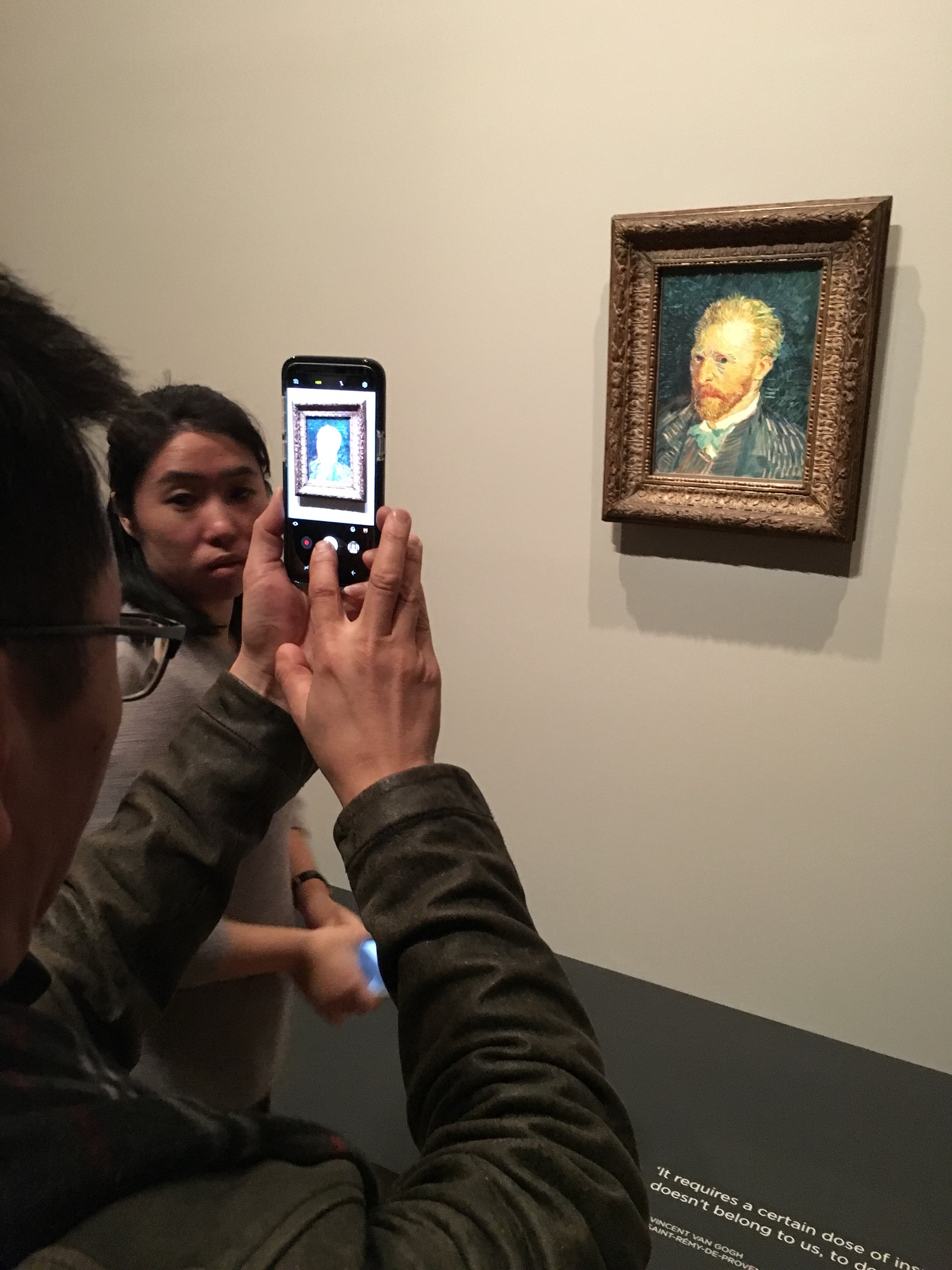
Modern Masters from The Hermitage at the Art Gallery of NSW
Feedback survey questions usually require a brainstorming session in order to define the aims of the survey. Once the aims have been determined, it becomes easier to write the survey questions. It’s impossible to retrieve and analyse data that has not been collected and there is no point in collecting data that staff have no use for. Think carefully –
How will the information be used?
What do staff want to find out about their visitors?
Where are your visitors from? Are they alone or with friends/ family?
Are they likely to return to your institution – this may be affected by accessibility. Are visitors local or from overseas/interstate? Are they already members, repeat visitors or first timers?
What are their interests? These may be specific to your museum collection, a particular exhibition or just a family outing?
What do people like or dislike about your museum collection, exhibitions, program and activities? Embrace both sides as an opportunity to think critically about what you offer and the way you offer it.
Also be conscious that research on people who do not visit the museum can be useful to determine why people don’t come, particularly the local community on your doorstep.
Using results
Constant self-reflection and improvement will encourage more visitors through the door. Use the findings from visitor feedback surveys to help with the planning and implementation of improvements to the “people interface” – Front of House, museum spaces and services (including facilities, cafe, museum shop etc.). Listening to and responding to the feedback findings will ensure the success of future marketing, promotional and public relations campaigns.
The solid evidence produced by analysing survey results will add credibility to your case when pitching to potential sponsors or funding sources to support future projects.
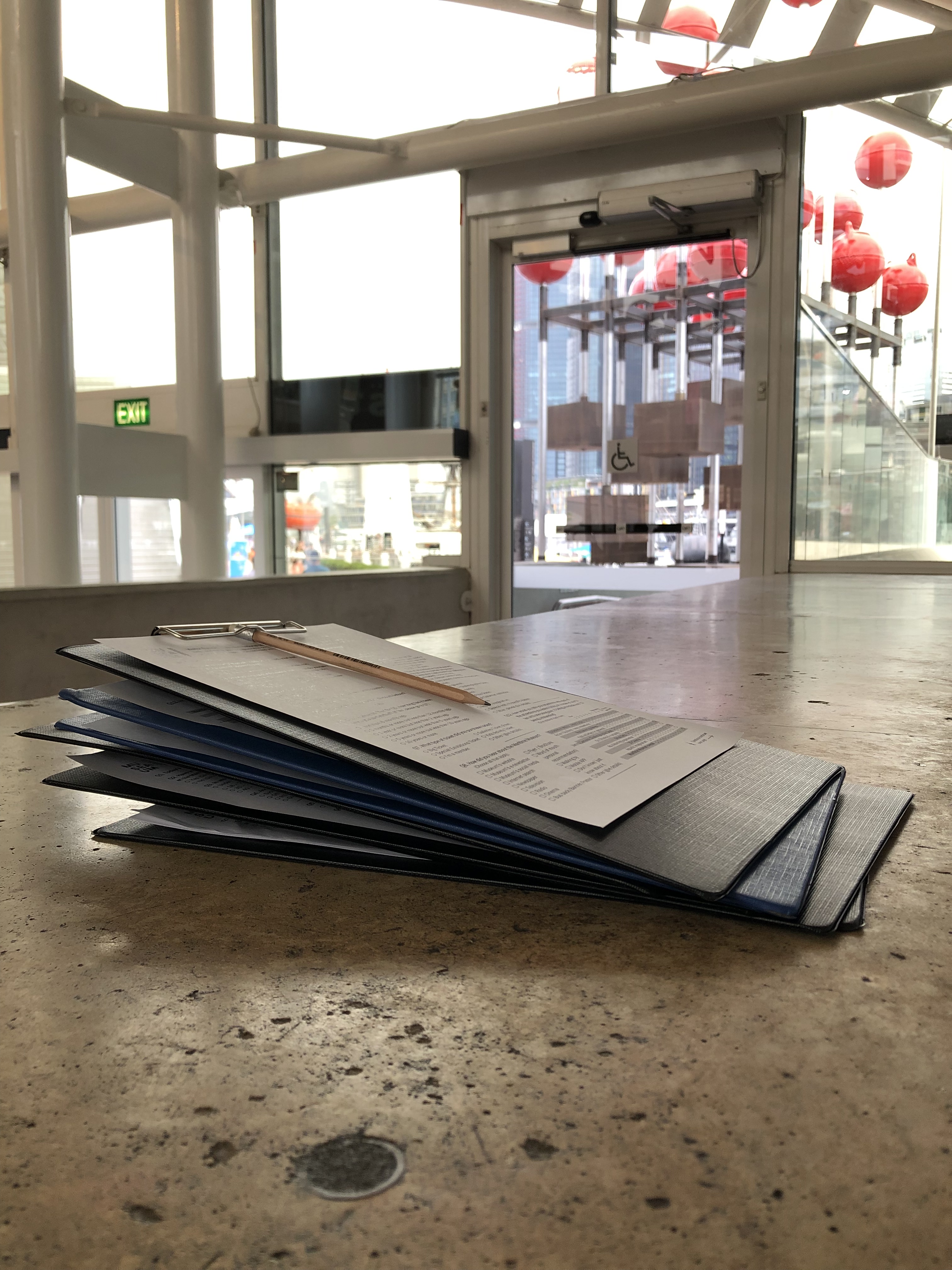
Clip boards at the ready. Many museums choose iPads for surveying. The importance thing is to use tools which allow engagement with the visitor. You may learn something extra during the exchange.
Tips for Survey staff on real time Surveying of Visitors
Take time to absorb the museum atmosphere on the day. Move around the museum spaces and work out the best spots to catch people.
Choose people carefully. There is no point in asking a parent with a screaming child or people preoccupied with something inside the museum where they are unlikely to want to be disturbed.
Introduce yourself to visitors being surveyed and tell them what you are doing emphasising that the museum needs their feedback to try to improve or find out their opinion on “(whatever)” depending upon the survey aim – ticket pricing, accessibility, current exhibition content and future exhibition topics ……..
Encourage each visitor to fill out the form themselves if possible but try to ensure that all pages are filled out
Add “in-house” predetermined requirements such as completion time, date etc. to each survey
Try to sample broadly
Don’t worry about knockbacks, if you are friendly then visitors might participate next time or at another cultural institution when they have more time.
Write down anecdotal comments which you think may add value to the survey being carried out even if the feedback isn’t relevant to the questions
Set yourself a target based on past experience – some days are better than others depending on the flow and mood of the museum visitors on the day in question and on the length of the survey.
Offer an incentive for their time. e.g. a coffee voucher, discount for next visit or even a voucher for the museum shop.
Thank them for their participation
Further reading for those people thinking about visitors to cultural institutions – what visitors think and why they may or may not visit our cultural institutions.
Potential visitors to cultural institutions are spending more time on the couch instead
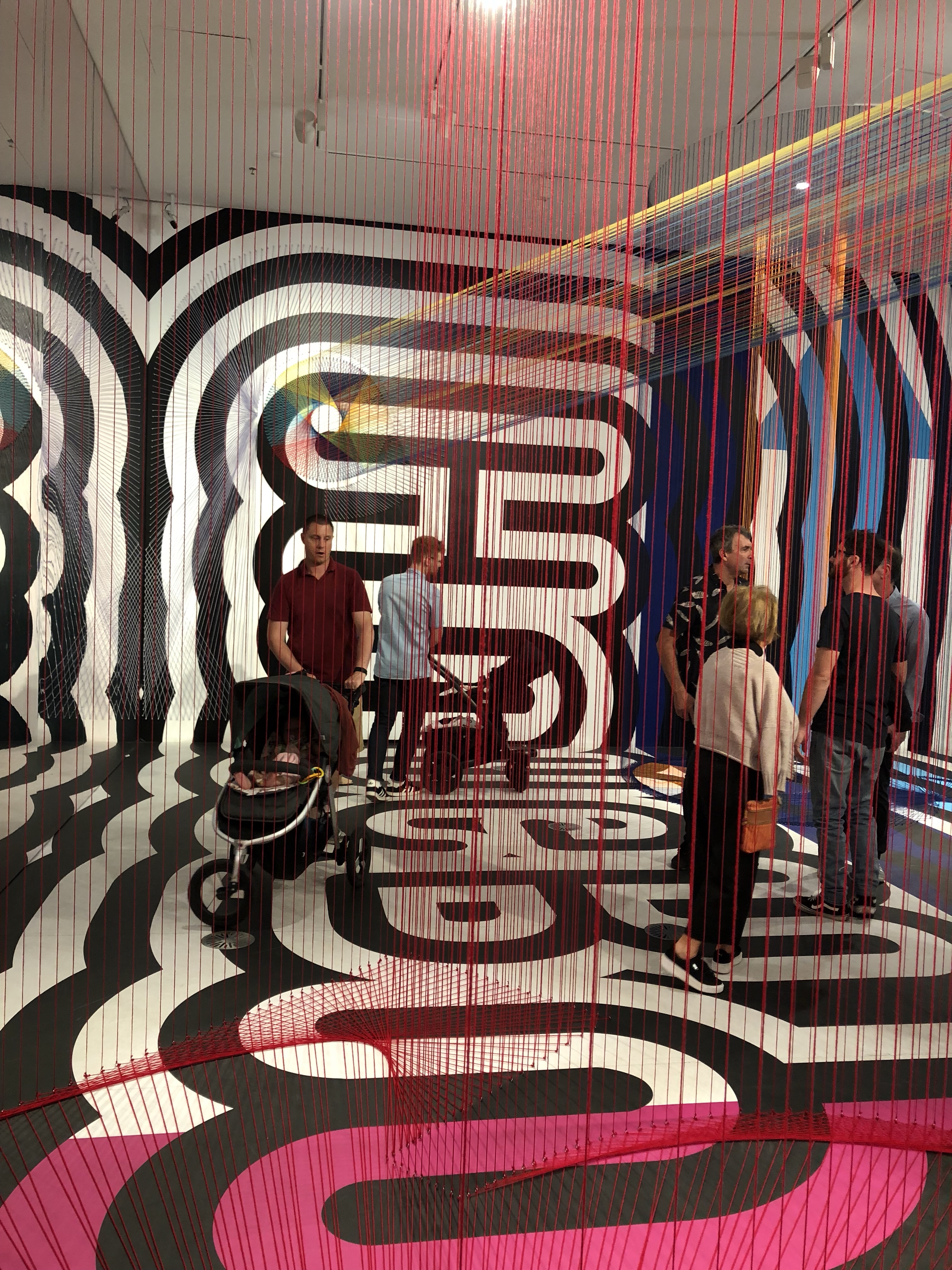
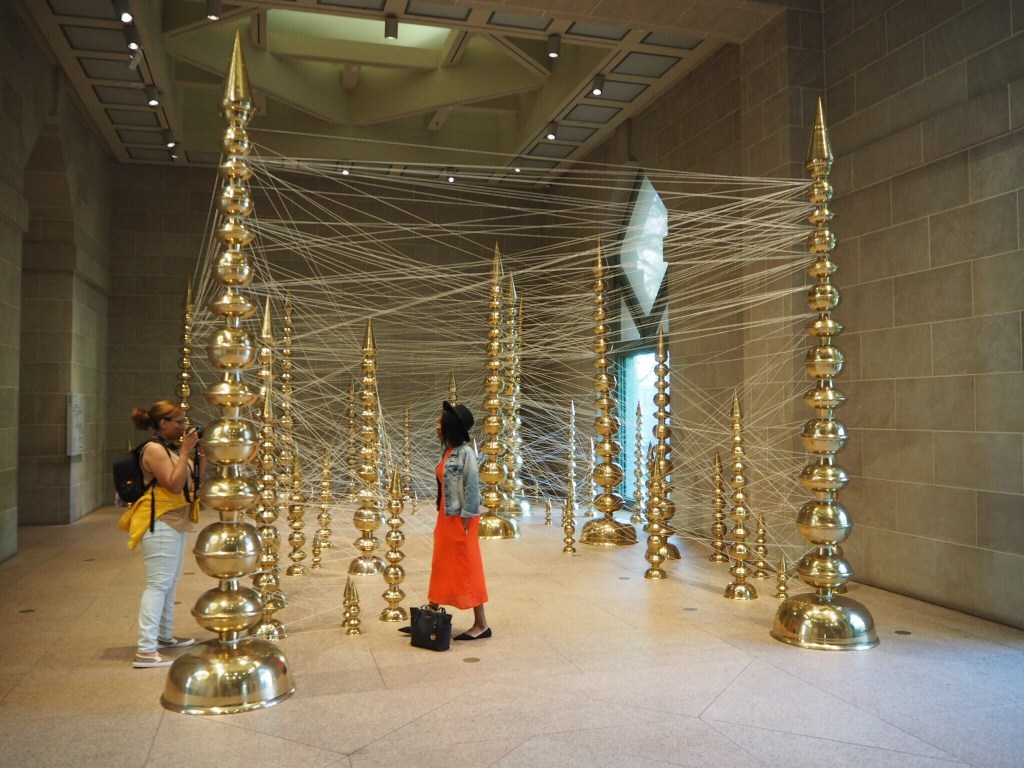
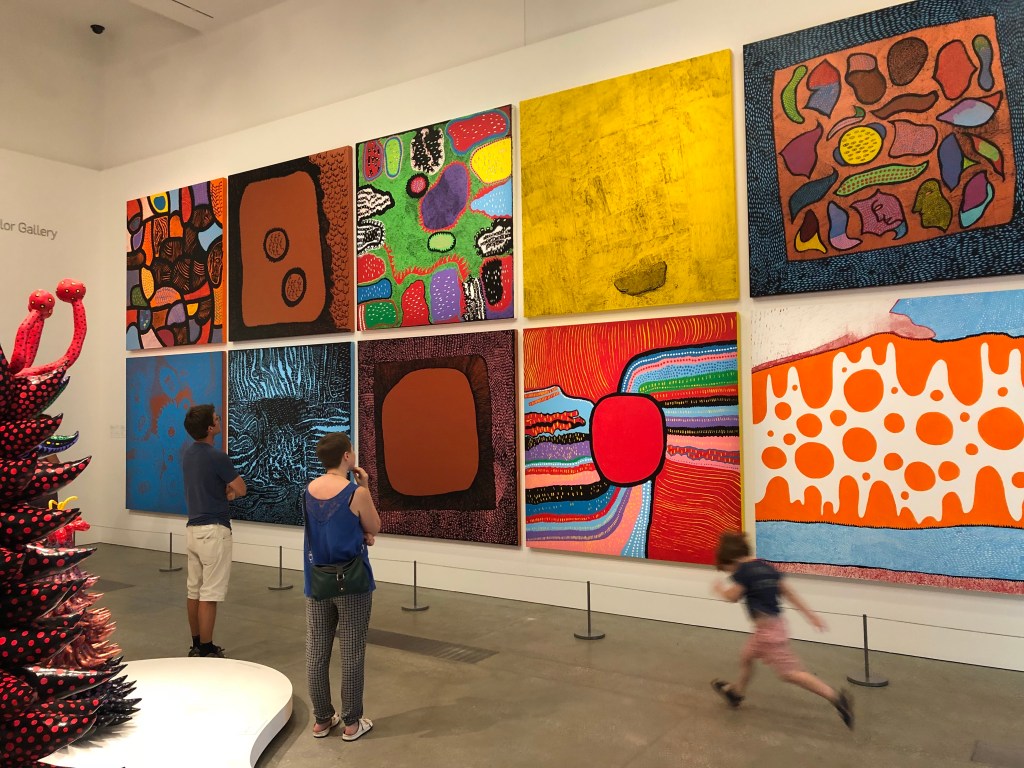
Pae White’s colourful installation drawing in all ages
The National Gallery of Victoria (NGV) is Australia’s oldest and possibly most well loved museum of art, founded in 1861. Its mission statement – “To illuminate life by collecting, preserving and presenting great art” and perhaps the unwritten mission of “giving it to the people”.
NGV Triennial 15 December 2017-15 April 2018
In 2016 the NGV was the 19th most popular art gallery in the world with more than 2.6 million visitors across its two campuses. The ranking places the gallery in the company of Paris’s Musee d’Orsay and New York’s Museum of Modern Art.
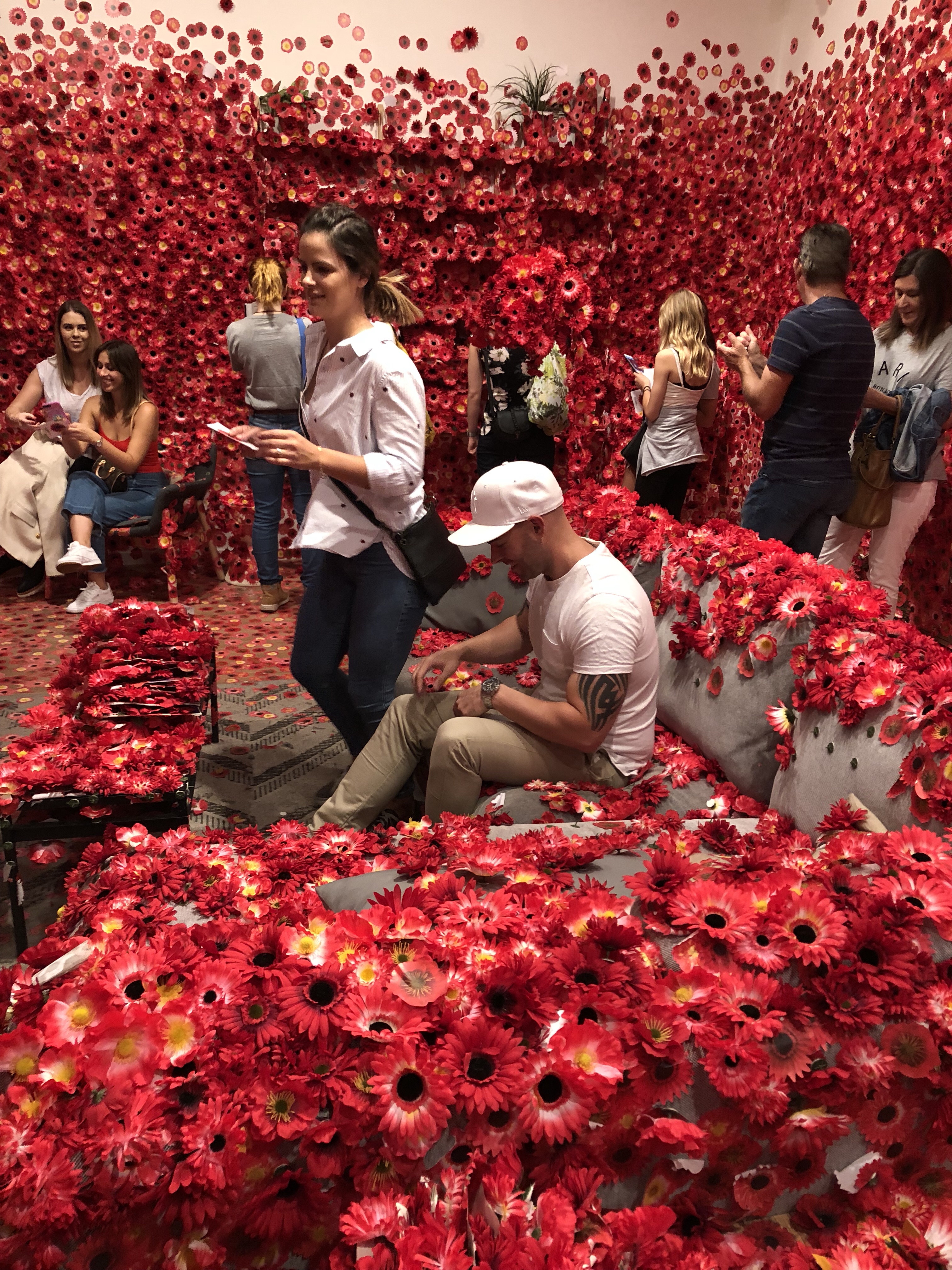
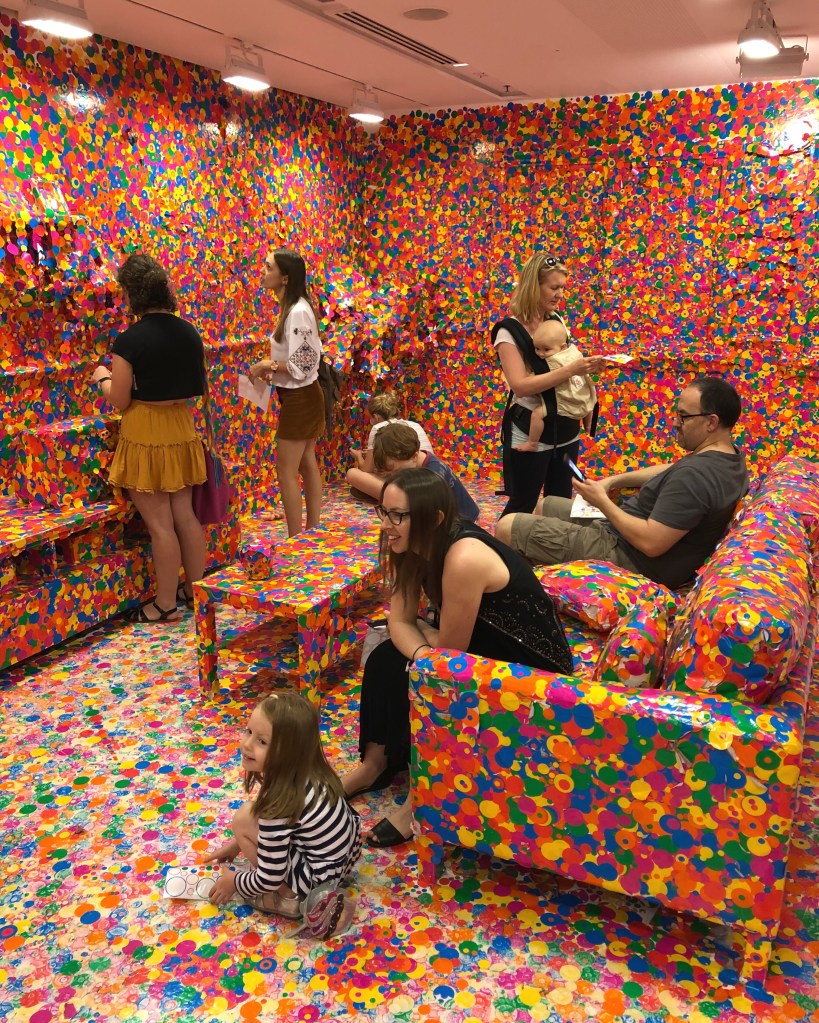
Yayoi Kusama’s Obliteration Rooms are always popular with visitors
The NGV held forty-nine exhibitions during 2016-17, including major retrospectives of international and Australian artists and designers, as well as focused displays of works in the NGV collection. The quality and variety of audience engagement initiatives presented in support of these exhibitions was extensive. They offered guided tours, audio tours, mobile phone apps, talks, lecture series and workshops as well as social events – such as the Friday Night events (aimed at capturing more of the younger audiences after work), the Summer Sundays music series and the NGV Kids Summer festival and supporting Kids spaces for some of the major exhibitions. For example – as part of the exhibition Andy Warhol / Ai Weiwei (2015-2016), NGV Kids presented Studio Cats, a large-scale installation especially for children and families to draw upon creative connections between the two artists and their mutual love of cats.
The Gallery aims to present programmes that engage visitors in meaningful cultural experiences and to keep them coming back.
According to their audience research data, The National Gallery of Victoria enjoys one of the highest community participation rates in the world. 70% of their visitors are local from Melbourne and regional Victoria unlike many other international art museums where the majority of visitors are incoming tourists. This also indicates that the locals keep coming back which is what every cultural institution needs to strive for. This is what Nina Simon talks about most recently in The Art of Relevance but also in The Participatory Museum and her Museum 2.0 Blog.
For any Cultural Institution, the collection remains fundamental to the audience engagement and education strategy. The thoughtful curation and presentation of historical and contemporary collections is a key museum management strategy for continuing and ongoing audience engagement. Colleen Dilenschneider regularly writes about this in her Know Your Own Bone Blog (most recently in Special Exhibits vs. Permanent Collections (DATA) and previously in Death by Curation).The NGV strategy is to ensure that its collection is accessible to the widest possible audience who may be unable to visit the museum through the ongoing work of the NGV Digitisation Project which is still progressing.
I have to disclose that I am already a big fan of the NGV and the way that they design their spaces. I visit the NGV each time that I am in Melbourne, so over many years have enjoyed both Summer and Winter exhibitions as well as taking time to learn about the permanent collection shown across both campuses (St Kilda Road and the Ian Potter Centre in Federation Square). On my recent visit I took in the inaugural Triennial at the National Gallery Victoria which on the surface (without actual audience data analysis) appears to be a great success. What I enjoyed most about this free experience was seeing the diversity of visitors attending the exhibition and the way that the work of 100 contemporary artists, architects and designers from 32 countries was juxtaposed against the existing works from the collection – which was great exposure.
Audience engagement with the art at NGV Triennial
I think that there is currently a cultural revival happening worldwide despite Government funding cuts trying to choke the Arts into submission. Creativity and cultural heritage feed the soul when so much about modern life seems to do the opposite. Now is a better time than ever for cultural institutions to offer their prospective audiences something new and different, to re-energise and maybe even reinterpret their collections to be more inclusive, to build community and feed the souls that are weary of modern life and meaningless 24 hour connectedness to media, social media and globalised sameness. Keep leading the way National Gallery of Victoria and hopefully other cultural institutions in Australia will follow or at least just lift their game a notch.
I’m not a big fan of measuring the success of visitation to cultural institutions by simply counting the numbers of people through the doors. I don’t believe that numbers alone give a true picture of visitor engagement and they certainly won’t give any indication of the way that visitors respond to the various spaces within a given cultural institution.
I confess that I love tracking visitors inside museum spaces because I always have preconceived ideas about what is going on inside various galleries and exhibitions and I am constantly surprised by what is actually happening when I analyse my results. On one occasion, I was observing visitors passing through a newly opened exhibition. I was thinking how good it was that there were so many families coming into the museum for this exhibition and I expected certain outcomes from my tracking and feedback studies for the following reasons:
Because it was a brand new exhibition space
Because it was school holidays and wet weather
Because it was free of charge to visit.
The tracking process that I use involves mapping the exhibition floor plan, then adding objects to that map, numbered within a cluster group or individually, depending upon their size and the size of the gallery overall. I use a technique learned from Dr Lynda Kelly involving timed entry and exit points, visitor groupings (individual, couple, family group), age groupings and an observational scale based on Judy Diamond’s chapter on observational tools to record the movement of people, using four categories for visitor engagement:
Ignore (I)
Skim (S)
Attend (A)
Engage (E)
Visitors who pass within two metres of an object or text panel but fail to stop are listed as Ignore (I). Visitors who look briefly at an object or text panel but fail to stop are listed as Skim (S) but those who stop briefly with both feet for two seconds are listed as Attend (A). Those visitors who stop and actively read text panels or look at displays are listed as Engage (E).
For the exercise mentioned above, what surprised me when I actually observed the individual visitors and tracked their pathway, was that what I thought I saw was not what was happening at all. When I analysed my results, I found that people weren’t really in the gallery for very long and definitely did not engage with the exhibits for a significant time period which was a lost learning opportunity. However, there were lots of “oohs” and “ahhs” and expressions of awe and wonder and very many photos taken of kids with various objects. Sadly, in most cases their curiosity was not sufficiently aroused for them to engage with the objects on a deeper level – by reading the associated text panels and using the interactive materials.
I’m not going to address the importance of engagement for Transformative Learning outcomes in this blog post because it has been well covered in the literature and other museum blogs (see Dr Lynda Kelly’s blog posts for information on TL as well as a review of the literature). Secondly, when I track visitors, I don’t usually look at the cultural diversity of the audience but more their age group and the effects of their group status on how they move through the spaces. Again, a better brain than mine, Colleen Dilenschneider talks about misinterpreting or not interpreting data on diversity correctly in her recent post “Why Some Cultural Organisations Overestimate Success in welcoming Diverse Visitors” for those who want to think about visitors in an even broader sense.
The advantage of carrying out observational and tracking studies is that institutions can combine the collected data with visitor feedback surveys to get to know their audiences better and form a clearer picture of how people spend time within their walls. Such studies can highlight the parts of an exhibition or permanent space which are not being seen, being used properly or are not engaging visitors at all. Sometimes problem areas can be tweaked by making small changes to the space – improved interior design, better text panels, signage, IT/general maintenance or even small changes to sound and lighting. It is interesting to see where people spend the most or least amount of time as they move through a cultural institution or specific exhibition. Other details can be recorded as well – such as:
Is there a particular item that is really popular with visitors?
Where do people stop and read text panels?
Are interactive displays working and easy to use?
Are there any blockages with the general flow of visitors?
Are there any blockages because of audio tours, queueing or people taking photographs?
In the case of couples and groups – is there some discussion about particular objects, interactives or related topics?
Are there any visitor comments which should be recorded as feedback to Front of House, Marketing or Curatorial Management?
Visitors are usually unaware that they are being observed. Observers are often mistaken for floor staff and visitors may ask questions or give feedback just because they are there. Understanding how visitors use different spaces within a museum can help to identify the strengths, weaknesses, and possibilities in that institution’s engagement strategy. I’ve often noticed that it’s the unexpected spaces, guided tours and participatory events in museums that occupy visitors for longer. What is it that keeps bringing visitors back time and time again? Exhibitions come and go but the permanent galleries, regular programmes and new innovations keep people coming back. For the younger visitors (particularly 3-12 age group), cultural institutions offering:
Curriculum focussed school programmes
Kid’s trails and activities
Learning and discovery rooms
Creative kids spaces
Touch trolleys
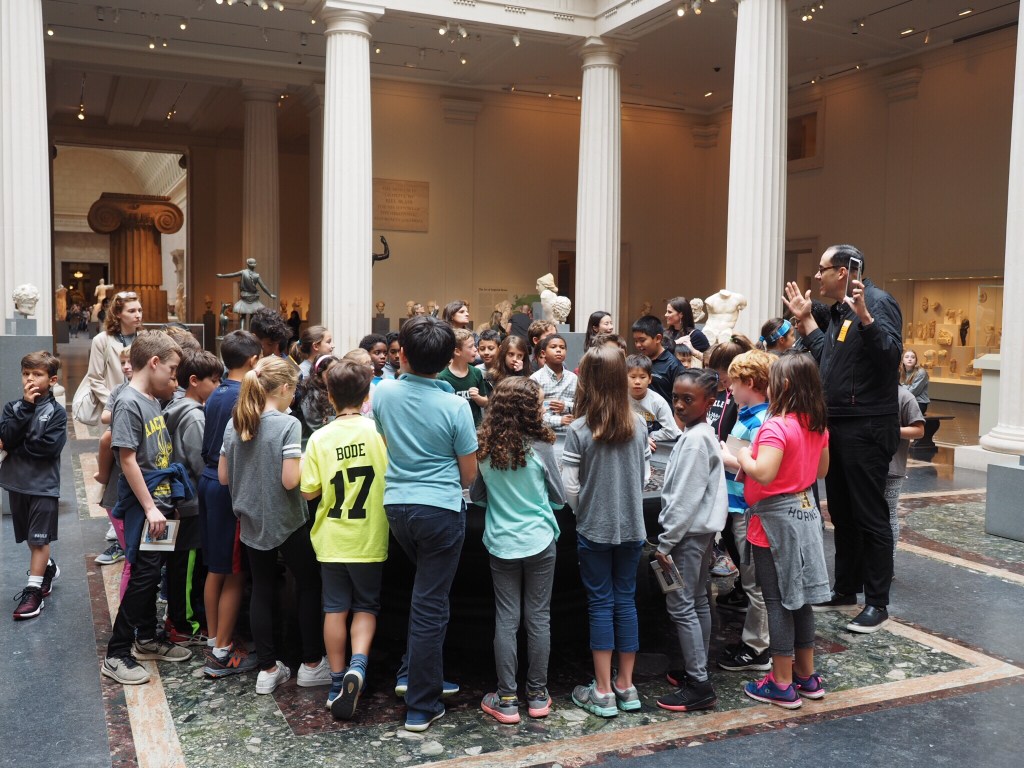
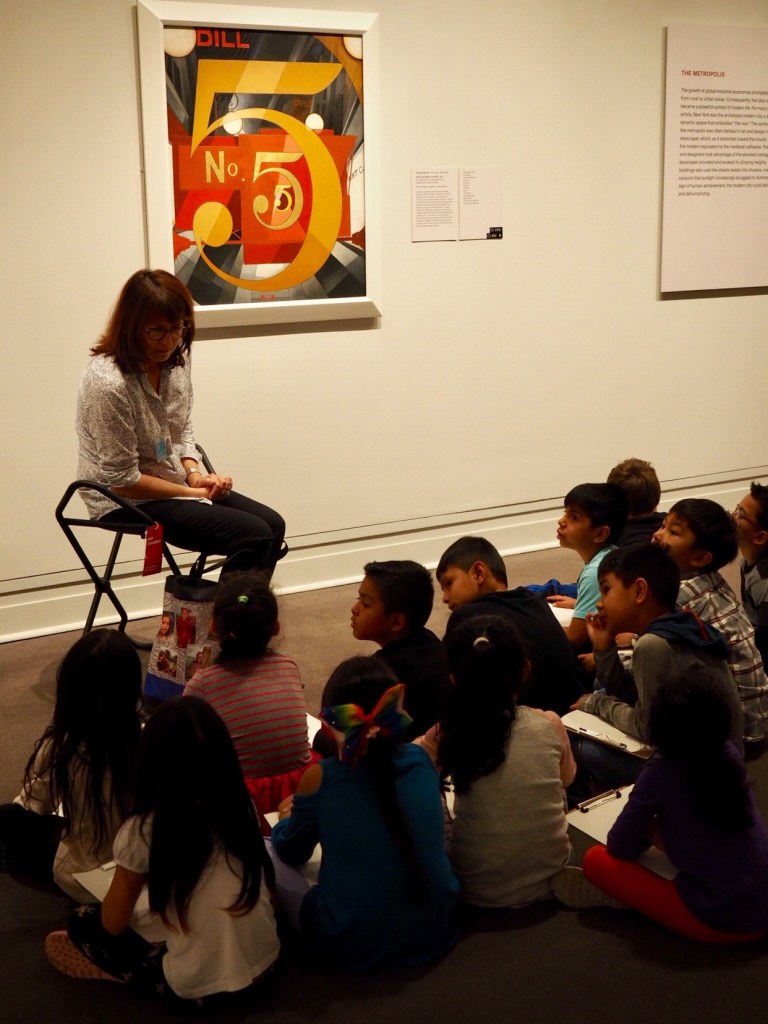
seem far more popular with families than cultural institutions without family programmes. For younger visitors – creating art and craft, touching and examining objects, interactive play, conducting scientific experiments, being able to ask supervising staff a variety of thoughtful questions, interacting with living specimens, dressing up in costumes, enthusiastically following some kind of trail or just reading books and looking things up on the computers seems to enhance their participation. At other times I have observed docents leading school groups through gallery spaces and getting much better engagement and learning outcomes for children (in support of their school curriculum) than children passing through with families.
For adults – well designed, aesthetically pleasing interior spaces, themed talks, guided tours, after hours events and workshops can add value to the overall visitor experience. Perhaps this kind of engagement appears less threatening on the surface but is still focussed on learning and engagement. MuseumHack posted a recent article “Why Design is Important to Your Museum”. For me the key quote is that:
“In the age of the Internet, museums can benefit
from applying this principle of design to their
spaces, as well as the services they offer. What
makes museums unique is no longer the information
they contain, but rather the context they offer to the
objects within their collections.”
My observations have strengthened my opinion that visitors like to see the presence of facilitators, invigilators, educators, security and guides in the gallery or exhibition space and not a total DIY experience. Generally, I have observed that visitors:
stop to ask questions or for directions or assistance
might ask for extra information about a display or gallery
might have their own narrative to share triggered by seeing an object on display
may have feedback for the museum about their visit.
It seems a pity when the audience is captive in the space, not to utilise that opportunity for engagement and feedback and to build relationships with the public, particularly when museums and galleries are striving to be “must see” and “repeat” destinations. I can’t see the point of developing growth and management strategies for cultural institutions without measuring audience engagement and feedback. Pen and paper studies are time consuming but relatively cheap to conduct and actually give a true snapshot of what is going on at a given time and space. Perhaps museums could learn from the mistakes of the department stores in the current economic climate. It may be that cutting floor staff numbers will not increase profits and will definitely detract from visitor engagement.
Government funding cuts affect all Australian museums. Museums are always looking for a point of difference – to produce newer and more engaging exhibitions to claim a larger share of the tourism/leisure sector dollar. They aim to increase their revenue by growing visitor numbers, partnering with corporates and attracting new sponsors to work with them into the future.
Entry to the Watermarks Gallery
When a permanent gallery is no longer seen as an attractive option for visitors, it is important to reflect on why it may have lost its pulling power with audiences before we throw the baby out with the bathwater. A case study for discussion is the Watermarks gallery at the Australian National Maritime Museum which will be replaced by a new permanent exhibition in late 2016 / 2017.
A study of the Watermarks gallery looked at the visitor response to both the objects on display within the space and the layout of the gallery. Museum visitors were observed over two weeks during school holidays which resulted in several findings about the space.
Firstly, 17 guided educational tours had been developed by the Learning and Education team in Watermarks for school groups. Each tour was designed to address criteria outlined in the Australian National Curriculum Guidelines (for Kindergarten – Year 12), looking at – waterways and the environment, Australian colonial history, Australian history in general,
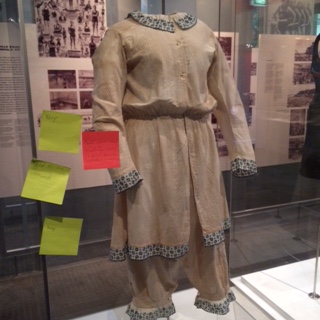
Post-it note experiment in Watermarks Gallery
maritime archaeology, navigation, identity, transport, swimwear and textiles. The objects within the space offered good sensory, emotional and educational possibilities to connect with the past but without the guided educational tour, their significance seemed lost in the flow and layout of the existing gallery which left self-guided visitors disengaged. A simple experiment was conducted with Post-It notes. Visitors were asked to tag their favourite objects and write on butcher’s paper about the thematic areas that they felt should remain on display and intact within the museum (or possibly in a travelling exhibition for other museums/galleries). As a result, visitors spent longer in Watermarks, engaged more with all of the objects and voted strongly for certain objects and sections which should be kept on display.
Gallery from above
Secondly, there were four entry and exit points to the exhibition which resulted in many visitors not understanding the original inspiration for the gallery which was “Australia’s ongoing relationship with water” viewed through the themes of Swimming, Rowing, Regattas, Sailing, Surfing and Indigenous Australia. In a gallery with so many entry and exit points, I observed that three simple solutions could have been applied to help restore the intended narrative:
reduce the number of pathways through the space
label every entry point with a text panel which reflects the inspiration for the area and its relevance for the gallery
ensure that each themed area has a narrative of its own which can stand alone and yet remain connected to the original Watermarks interpretation.
Thirdly, it was noted that the digital components of the gallery had great content but were not necessarily in optimum positions within the space to show off that content. For audiences to successfully engage with the digital components of any exhibition or permanent gallery, it is critical that:
Audio Visual (AV) stations and touch screens are working correctly
AV stations are well positioned
For substantial content, e.g. films lasting several minutes, that seating is available for the viewer
Text panels supporting the AV stations provide sufficient explanation on the way that the station should be used. For example, films may be self-explanatory whereas other interactive stations may require a little more context for their optimal use.
Finally, museums and department stores have traditionally had comparisons drawn when it comes to aesthetics and audience engagement. Perhaps museums could learn from the mistakes of the department stores in the current economic climate. It may be that cutting floor staff numbers will not necessarily increase profits. My observations in Watermarks have only strengthened my opinion that many visitors like to see the presence of facilitators, invigilators, educators, security or guides in the gallery or exhibition space. I have observed that visitors:
stop to ask questions or for directions or assistance
might ask for extra information about a display or gallery
might have their own narrative to share triggered by seeing an object in the space
may have feedback for the museum about their visit.
It seems a pity when the audience is captive in the space, not to utilise that opportunity for engagement and feedback and to build relationships with the public, particularly when museums and galleries are striving to be “must see” destinations. In short, even if a gallery appears to have lost its pulling power, it may still have one last lesson to give museum staff before its removal.
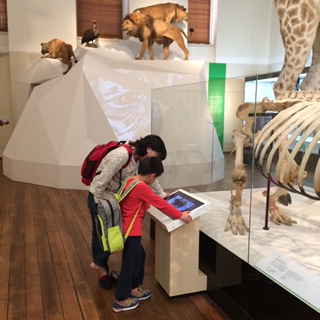
It seems funny that in the “information age” when museums are trying so hard to add a digital dimension to their galleries that I heard a Grandmother say to her grandchildren that they were “forbidden to touch the digital screens” in the Wild Planet gallery of the Australian Museum. I noted that the children were behaving badly and were fighting over the touch screens but the issue was really about the Grandmother’s frustration at the children not seeing her view of the museum space. She was trying to tell them about the specimens and wanted them to study each object and the text panels on display but instead they ran ahead, excitedly looking for the next touch screen and were not engaging in the way that she wanted them to.
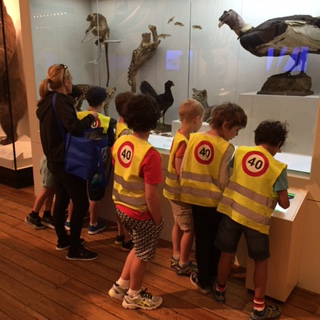
Vacation Care group visiting Wild Planet with museum invigilator
Does it matter? Yes and No. Yes, it matters that the Grandmother has misunderstood the benefit of the touch screens and the intent of the Australian Museum curators who used them to provide context and enhance the visitor connection with the taxidermy objects on display. Perhaps she has also misunderstood what the children were doing with the screens – that they were using them to learn. No, it doesn’t matter because visitors arrive at the museum with their own agendas and personal experiences and expectations of the visit regardless of what is presented by the museum and the original intent of the museum curators and designers who created the exhibition.
Jordan Shapiro’s article on on Kids and Screen Time talks about the changing attitude of the American Academy of Pediatrics towards screen use and the fact that they found no real problem with children having unlimited screen time because technology is “the way of the future” and that “digital content can enhance the learning experience”. However the article does not discuss the kinds of issues that families worry about – like screen addiction and the overuse injuries occurring in some children who do not seem to be able to self regulate their use of digital devices. For many families, TVs and screens occupy a fair chunk of their children’s day, and so a trip to the museum is actually an opportunity for a different kind of experience with the family interacting with one another in a fun, learning environment.
I’ve read some interesting articles on the subject of digital museum exhibits and audience engagement. Two articles in particular from 2014 that I have linked to are related to each other and extremely relevant when considering the use of digital engagement tools in exhibitions. The first is a blogpost from the V&A in London by Andrew Lewis titled – What can we learn from watching groups of visitors using digital museum exhibits? This post considered research carried out at the V&A and Natural History Museum in the UK, using direct observation of visitors within both museums as discussed in – “Cross-disciplinary frameworks for studying visitor experiences with digitally mediated museum exhibits”. The research was carried out by Theano Moussouri and Eleni Vomvyla of UCL Institute of Archaeology and Sara Price and Carey Jewitt of Institute of Education Culture Communication & Media (London Knowledge Lab) Institute of Education.
Family friendly options for learning in Wild Planet
What I like about the research is that it isn’t just counting the numbers of visitors entering an exhibition. It is based on observing visitor behaviour with a range of digital exhibits and collecting visitor feedback to extract concrete evidence about the motivation of visitors interacting with digital displays as well as their experience in finding meaning from the digital tools being used in the exhibition. Such information can then be used to tweak an existing exhibition or inform the design of a new exhibition with digitally interactive components.
Audience research and visitor surveys are important feedback mechanisms for any museum or gallery serious about their digital engagement strategy in the twenty first century.
I support the digitisation of museum and gallery collections. There are so many places that I’d like to go to but realistically I won’t have the time or money to travel to all the destinations that I have on my bucket list. Enter the digital museum. Museums with a strong digital presence allow the virtual visitor at least some entrée into their collections. When collections are digitised it also assists researchers access to a wealth of new information to study without them ever having to leave the comfort of their own home.
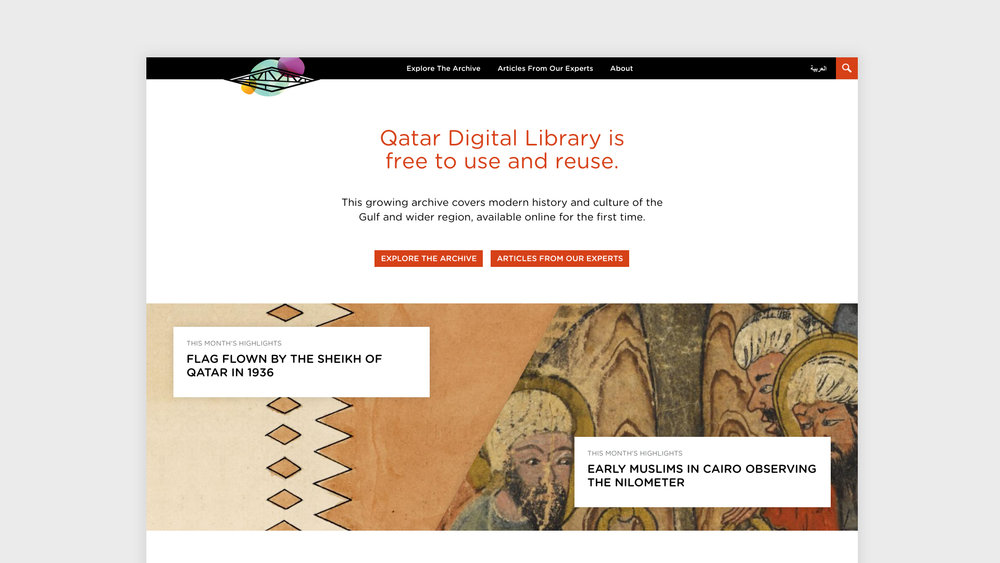
One of the best stories that I’ve read recently was in Cosmos Magazine[1] which reported on The British Library Qatar Foundation Partnership launching the Qatar Digital Library – a new bilingual, online portal which provides access to previously undigitised British Library archive materials relating to Gulf history and Arabic science. Their vision was to prepare the people of Qatar and the region to meet the challenges of a changing world by leading innovation in research and education[2]. (See Fig 1.)
Fig 1. Home page of Qatar Digital Library
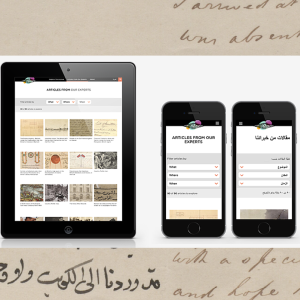
The British Library (in London, England) has amassed one of the world’s greatest research collections and with the Qatar Foundation has undertaken a huge project to digitise more than half a million pages from their collection consisting of images, manuscripts, maps, sketches, personal archives and East India Company Office Records. The project is an ideal example of the role of the contemporary curator who as part of a project management team of curators, cataloguers, conservators and digitisation experts works to create a valuable online digital resource[3] from a significant collection of objects located in the British Library. The Qatar Digital Library[4] aims to bridge the gap between past and the future by providing access to information about the history and heritage of the Gulf and Arabic science. Before digitisation, researchers would have manually searched a printed catalogue or physically visited the library to access a particular item which would then be retrieved from the archives.
The web-based, interactive, multilingual information is more searchable and accessible for new audiences in Qatar, the UK and other online researchers and hopes to inspire new forms of interpretation from the original historic documents. The project has created high quality contextual and interpretative material to facilitate the use and understanding of the digitised content. Digital technology has provided a platform for the discovery of history from the gulf region by allowing access to the original primary source scientific documents in Arabic which can be reinterpreted in the future without physically visiting the British Library.
As part of the process, the curator has taken primary sources, such as a photograph album, showing the everyday life in Afghanistan (social, architectural, trade) during a one month period, and digitised the pages allowing the voice of the object to come alive for the researcher. Supporting text has been added to contextualise the objects for the online audience in the same way that they would be supported by curatorial staff in the British Library.[5]
In order to encourage new audiences, the project team has actively tested the portal with possible users such as academics, archivists and young people, to find out what they need from the content and how they would use the collection for their own purposes. The feedback has been used to create a better system. The online catalogue is intuitive and researchers will be able to access the collection more easily than the original objects in the British Library. Evaluation of the new website will be carried out to determine the project’s success by measuring website users, site feedback, media coverage and other Key Performance Indicators.
[5] Some of the information cannot be accurately interpreted without advice on the circumstances in which the records were created which is normally provided by archivists in the reading room at the British Library. Links to related material may also be provided by the curatorial staff in the British Library.
So many well regarded museologists have spoken about the role of museums in this century. Nina Simon is a strong believer in museums working with their communities, Ed Rodley writes about the museum as contact zone and debates the museum models for “traditionalists” versus “progressives”. Seb Chan believes that museums are playing catchup with their digitisation programs and that it is important for museum staff to reinforce the value of the physical visit in all the thinking and planning for their visitors.
I recently participated in a MOOC (a free Massive Open Online Course) by the University of Leicester and Liverpool Museums – Behind the Scenes in 21st Century Museums. The course built on some of the thoughts and issues discussed in articles by Simon, Rodley and Chan – such as growing museum audiences, creating emotional connections between visitors and collections/exhibitions, as well as the role of museums in starting conversations about social justice, human rights, health and well being etc.
When I consider all of the information above, the word that summarises museums in the 21st century for me, is “connectedness”, and the relationship of each museum to its audience. You can examine any of the issues raised above and in every case, it’s about having flexible ideas and staying connected to your audiences, no matter what museum model you are channelling. An article by Holland Cotter from the New York Times in 2015 discussed the fact that there is no single museum model and that museums will be defined by “the role that they play as a shaper of values” and “the audience that they attract” rather than just their architecture and contents.
What are Museums in the 21st century?
⇒Museums are about – vision, collections and exhibitions, context, meaning and shaping community values.
⇒Museums are connecting to the public in many ways, through –
Community
Digital interface
Architecture
Collections and exhibitions
Physical location
Physical visits
Educational programmes
Acting as the contact zone for conversation between divergent groups
Addressing social justice, health and wellbeing issues
Growing audiences
Strategic marketing and publicity
To achieve all of the above, the financial and time commitment by museum management behind the scenes is huge. The many hours required to maintain collections and exhibits, develop educational programmes, design and curate exhibitions, streamline security, IT and the Front of House interface, maintain social media presence and continue with the digitisation of collections, train paid and volunteer staff and build membership and audience numbers can often be underestimated because this work isn’t “seen” by the public or “understood” by government funding bodies.
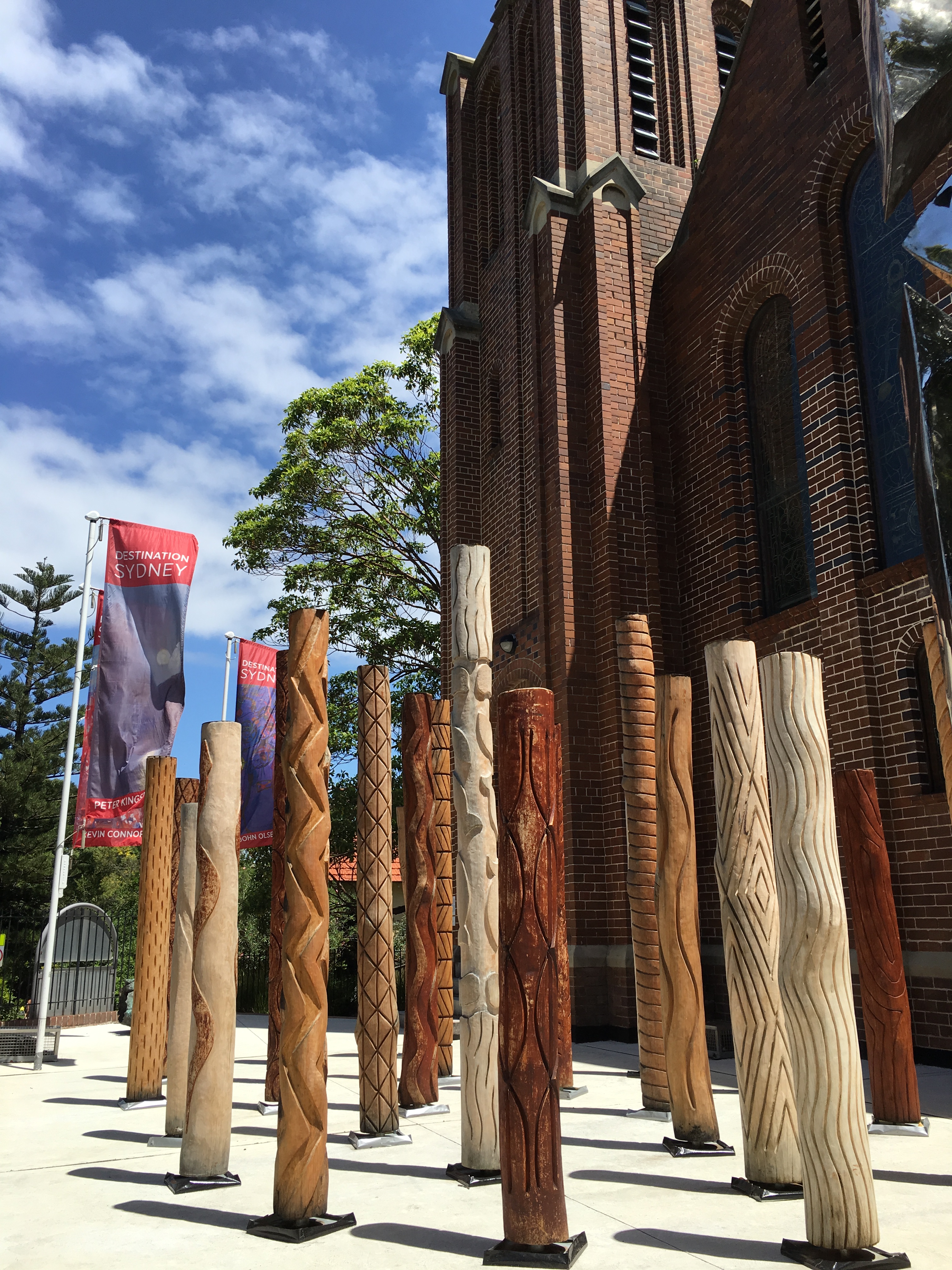
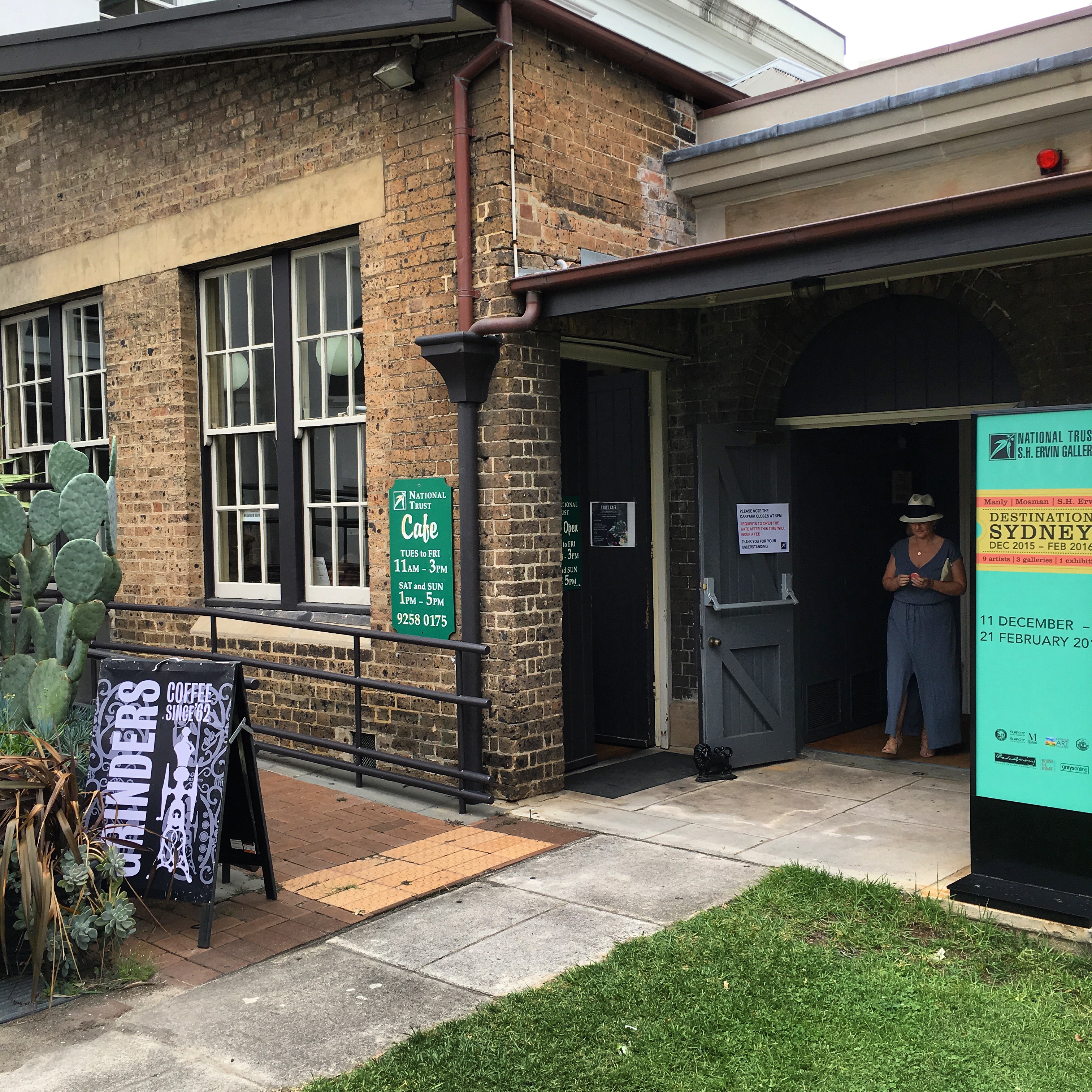
Destination Sydney at S H Ervin Gallery, Observatory Hill
It’s good to see some of the smaller Sydney museums pulling together to create an exhibition such as the recent Destination Sydney at Mosman, Manly and the S H Ervin Galleries. They used one curator to create an exhibition which could stand alone in each space, but combined showed 9 iconic Sydney artists drawn from major private and public collections. According to a report by Museums and Galleries of NSW the exhibition drew a much larger audience for all three galleries and greatly increased retail sales. Another report on the UK Museums and Heritage website talks about the collaborative work being done by museums in Bath to gain a greater market share of visitors to the region which has a number of heritage attractions competing for local and tourist numbers. Jointly the museums have worked to develop audiences, engage community and be more strategic in their marketing and publicity in order to create a more sustainable and resilient museum sector.
It’s hard to predict the future for museums, but constant introspection and learning from the experience of others goes a long way to ensuring that visitors will keep coming through the doors.
I do think that there is a place for audio tours in galleries and museums. I occasionally like to take a guided tour with a gallery staff, volunteers or an audio tour, particularly when I am unfamiliar with the subject matter of an exhibition or when I am in a different country and English is not one of the primary languages spoken in the museum.
An audio tour can really enhance the visitor experience and was probably at the forefront of museums trying to better engage digitally with their visitors. The first audio tour is said to have been developed by the innovative Director, Willem Sandburg at the Stedelijk Museum, Amsterdam as early as 1952, and there have been many changes and improvements to audio technology since then.
The best audio tour that I have ever taken was at Choeung Ek (the Killing Fields) in Cambodia. The tour was developed by an Australian company – Narrowcasters (available in 15 languages) and allowed the visitor to move around the memorial park at their own pace, to stop, sit or reflect on the horrific events surrounding the genocide of three million Cambodians by the Khmer Rouge. The audio used historical facts, music, poetry and the personal stories of survivors which were incredibly evocative and dealt with difficult subject matter in a place which was full of the ghosts of innocent men, women and children. The park had plenty of space for visitors to wander in peace and quiet to think their own thoughts in relative silence.
Scottish Greats at AGNSW
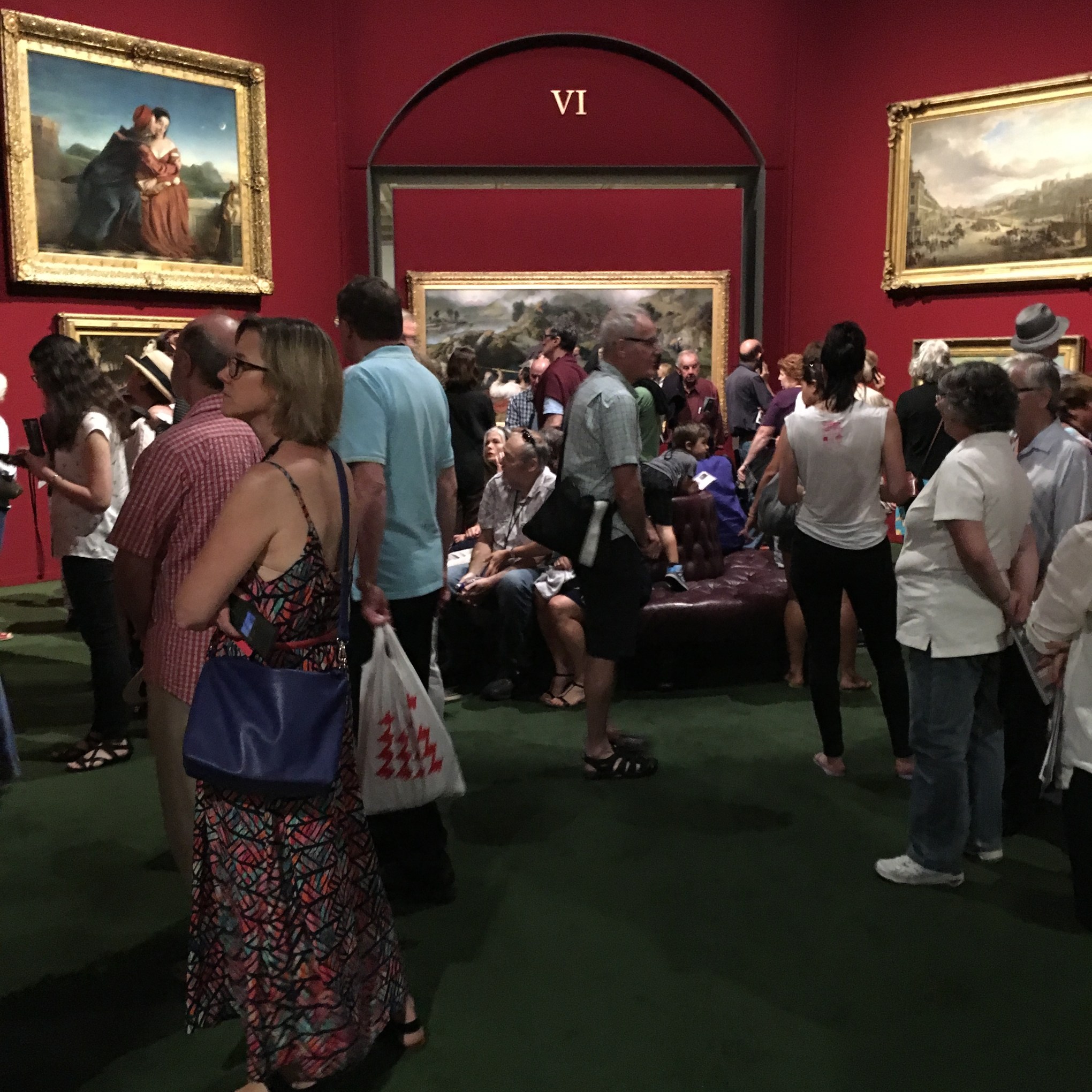
Sadly, when I visited the Scottish Greats at the Art Gallery of NSW , the free audio tours detracted from my museum visit because the majority of visitors forgot about their audio tour etiquette in the limited exhibition space. I decided not to take a tour on this occasion because I wanted to really look at the objects, drink in the fact that I was actually seeing some of them in real life and then go back and look at the information about the works that I was drawn to.
I learned this technique from Heather Whitely Robertson who was at the Museum of Contemporary Art, Sydney (Director, Audiences and Creative Learning) and has now gone to the Art Gallery of NSW, Sydney (Head of Activation and Learning) in a similar role. It works for me because I am a visual learner and I like to connect with objects visually in the first place and then find out the facts later. At the MCA, Heather and her team introduced all sorts of techniques to encourage students to engage with exhibitions in a more creative way rather than just ticking off the visit and walking away with very little learnt from the experience. As far as taking audio tours, users need to follow some basic rules.
Rule No 1 for Audio Tours
Look at the object in front of you and then step back to listen to the information being provided on your audio guide. Do not stop and stand in front of each object for an inordinate amount of time, blocking the view of crowds milling around behind you while you remain oblivious to their presence and mounting frustration.
Rule No 2 for Audio Tours
Do not have conversations with your companions when taking an audio tour because you have something in your ears and you don’t realise that you are talking loudly which spoils the atmosphere for the rest of us trying to soak up the beauty of the amazing works from the Scottish National Gallery in Edinburgh (or any other gallery or museum!).
There may be other rules that I haven’t thought of yet.
Ai Weiwei using Lego to draw attention to issues of social justice.
Entry to Ai Wei Wewi’s Lego installation at NGV
Inside the Lego installation – studying the comments made by various activisits in Australia.
Don’t get me wrong – I love Lego. It is a wonderful creative tool with endless possibilities but I am so sick of seeing it in museums and galleries as the main attraction.
Audience engagement is something that I’m passionate about. I don’t think that the museum sector can just sit back and wait for visitors to come through their doors because of a single exhibition or a Lego attraction. They need to build on relationships with their local communities and develop a substantial membership base, offering reasons for members to visit frequently. They need to be creative and flexible with their collections, providing a great package for tourists who may only physically visit the museum once in their lifetime and also for the “not so local” visitor to give them a “taste” of what’s on offer. Realistically, a “taste” (and an entry price) which makes the visitor want to return to the museum the next time that they’re in town.
I don’t begrudge National Galleries Victoria (NGV) for harnessing Ai Weiwei’s talent to create a major new installation using Lego for the recent NGV Andy Warhol | Ai Weiwei blockbuster exhibition (December 2015 April 2016). Weiwei’s crowd-sourced Lego work focused on Australian activists, advocates and champions of human rights, freedom of expression, freedom of information and the internet and highlighted many of the current social justice issues facing all Australians. But seriously, everyone else needs to give Lego a miss for a while and work harder to attract visitors, particularly families, with innovative exhibitions and galleries using their own unique collections or borrowed works from other places which are in line with the stated vision and purpose of their space.

















 Museum Whisperings