
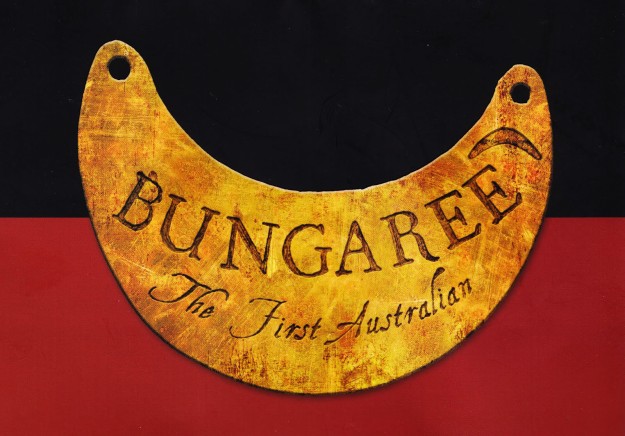
Bungaree’s breastplate from http://budawagroup.com/history/
Before Australia Day, there is always discussion about the date, 26th January, what it means to every Australian and the conversations are quite thought provoking. I don’t believe that you can change history, but you can certainly change the way you look at the facts and think more critically about them. Australia was not the only country to be colonised by the British. I am certain that had it not been the British, it would have been the Dutch, French or Portuguese who were all active on our coastline at that time. I believe that the outcome for Indigenous Australians would have still been quite bleak.
We may not be able to change history but museums have the power to revisit and reinterpret the facts. Australians still have much to learn about our nation’s history and perhaps learning new things can help all of us to build on our cultural heritage and celebrate the contribution of Indigenous Australians to our country and to resolve the issue of January 26th as a contested date for Australia Day.
A few years ago, I saw a great art exhibition of works on paper about Bungaree: First Australian at Mosman Art Gallery (in Sydney), which made me think about the man, his place in Australian history and the way that these artists created works that acknowledged and critically re-interpreted the story of Bungaree – an important Indigenous figure in the colonial Sydney era. Bungaree’s story would fit well into the vision and exhibition strategy of museums such as the Australian National Maritime Museum, Australian Museum or the National Museum of Australia.

Merve Bishop Bungaree: The showman 2012, digital photography, Giclee on archival pigment, 100 x 200 cm. From an exhibition curated by Djon Mundine at Mosman Art Gallery, Sydney 1 September – 25 November 2012
The man
King Bungaree (c1775-1830) was well respected by the Indigenous Australian community and developed a reputation as a negotiator between Aboriginal and European cultures during his lifetime. He accompanied Matthew Flinders on several journeys in 1798, 1799, 1801 and 1802-03 where he acted as interpreter and intermediary, a role which he undertook several times for European explorers in Australia. Bungaree was the first Indigenous person to circumnavigate Australia and contribute to the mapping of the Australian coastline and yet more is known about “Trim”, Matthew Flinders’ “sea-faring” cat than the man Flinders described as having “a good disposition and open and manly conduct that attracted my esteem”[1]. I have often thought that the life of King Bungaree would make a wonderful museum exhibition – to rediscover the voyages undertaken by Bungaree with Matthew Flinders, and in particular the circumnavigation of Australia but with more emphasis on Bungaree – his character, his family and his exchanges with other indigenous people during those journeys.
A great deal is known about Australia’s maritime heritage but this would be an opportunity to engage with a different audience, reinterpret the existing historical record and to be more “inclusive” of an indigenous audience with a more meaningful dialogue about the place of King Bungaree in Australian history[2]. This indigenous man was well respected by the Governors and officials in colonial Sydney. He was not only known in NSW but his fame spread to nineteenth century Europe both in artworks inspired by colonial Australia and in the journals of men that he sailed with. Considering that “Reconciliation” is an important theme for Australian museum projects recently, then public learning and collaboration with indigenous communities offers a museum the opportunity to become a driver for social change and inclusion[3]. It is a chance to research and communicate factual information to visitors about some of the relationships formed between the newly arrived colonial settlers and the indigenous population at that time.
The Exhibition
In the past, most exhibitions on the exploration of Australia tend to be Eurocentric, and yet here is a perfect opportunity to develop a more “inclusive” exhibition for the public with an opportunity to reinterpret Australian history so that more is known about the man who contributed much to the exploration and development of our nation. The following themes could be examined:
- Bungaree the man – with paintings, prints and writings about Bungaree. Bungaree was a tribal chief who had the ability to straddle both the indigenous and colonial worlds. Bungaree spoke English well and his sense of humour was well noted[4]. There are several portraits and writings about Bungaree available to assist in developing a picture of his character, his family and his contribution to the circumnavigation and mapping of Australia with Matthew Flinders and Phillip King. He was the subject of at least 17 portraits during his life time and several more after his death – many by well known artists (The National Library of Australia[5] collection has portraits by Augustus Earle, Charles Pye, Charles Rodius, and W.H. Fernyhough).
- The Journals of Flinders and King – There are original documents written about Bungaree and his family members. Matthew Flinders’[6] and Phillip King’s[7] comments on Bungaree in their daily journals. (National Library of Australia and State Library of NSW collections). A clever mimic, Bungaree could imitate the walk, gestures and expressions of past Governors of New South Wales. Like Shakespeare’s clown in Twelfth Night, he was ‘wise enough to play the fool’ and used his humorous talents to obtain clothes, tea, tobacco, bread, sugar and rum for himself and his people. As author and historian Geoffrey Dutton commented: ‘He mocked the white men by mocking himself[8]’. When in town, Bungaree was known to wear cast off uniforms and a tricorn hat given to him by the NSW Governors of the period and officers in the regiment. This period clothing should be researched and replica uniforms and hats produced as accurately as possible from illustrations and historical knowledge of the dress at that time. The breastplates of King Bungaree and Queen Gooseberry awarded by Governor Macquarie in 1815 are held in the Mitchell Library Collection, State Library NSW.
- Bungaree’s Family Tree (This would be require significant research because he supported 5 wives and many descendants).The existing family tree for Bungaree and his wives is quite complex. His first wife was Matora, followed by three other women, Gooseberry (Cora), Charlotte Ashby and Biddy Salamander. There are many descendants of Bungaree and his wives identified in the literature which also details the places that they lived. Research may extract further evidence about the number of wives he had and about his known descendants which could be presented using an interactive display. This would assist existing and new descendants to find out more information about the family tree. Such a display could include some web links for searching Bungaree’s family history.
- Indigenous Languages – A study of Indigenous dialects/lifestyles in the early 1800s. Bungaree was a Kuringgai man from the Broken Bay area along the Hawkesbury River and would have been quite unfamiliar with the languages and types of housing in other parts of Australia – contrary to the incorrect European view that all Indigenous Australians were the same and had no cultural heritage to speak of. In the early 1800s there were an estimated 300 distinct indigenous languages in Australia[9]. Currently there are 145 languages still spoken but of these 110 are critically endangered which is the largest and most rapid loss of languages in the world. In this display, show the spread of aboriginal dialects, comparing 1800s to today. Use audio examples of a couple of words to compare the different dialects. Bungaree was taken as a translator on these sea voyages which showed that early settlers had no idea that the culture and language of indigenous settlements was extremely variable in different parts of Australia. Discuss “terra nullius” presumption and note all the places that they anchored on the voyage.
- Map making – Present a series of maps of Australia from Bungaree’s time including discussion about mapping instruments and techniques used to map the coastline – something which we take for granted in modern times. Demonstrate the navigational feat of the Matthew Flinders’ expeditions using audio visual support to show a map of Australia during Cook’s time and how that map changed after each of Flinders’ journeys with Bungaree and including the final circumnavigation aboard the HMS Investigator. Discuss the fact that it was Flinders who named Australia.
- Indigenous Australia in Bungaree’s time – How did Indigenous people travel Australia via the ocean and waterways? How did they use the stars to navigate? How did they use Songlines to travel and to pass information down through the generations? Compare the knowledge of Indigenous Australians with the instruments used in early 1800s for navigation and mapping. Demonstrate how Australia would be mapped today -(showing modern photographic and satellite techniques. (Maps and instruments to be sourced from the ANMM collection and the National and State libraries).
- HMS Investigator – Look at the history of HMS Investigator and the other vessels which Bungaree sailed on to Norfolk Island, Bribie Island and Hervey Bay before the circumnavigation of Australia with Flinders. The Investigator carried a crew of 88. He also made other expeditions with Philip Parker King. Use diagrams and refer to the HMS Investigator using a scaled model such as the model – 1:48 inches with decking, rigging and fine detail (Object D 7835 sourced from State Library of SA). Also discuss the fact that there were nine different HMS Investigators in British naval history showing the lifespan of each ship on a historical timeline.
- Trim and Bungaree. Finally the story of “Trim” and Bungaree and including the place of ship’s cats on these exploration vessels using a text panel discussing the role of ship’s cats in colonial times. There should be a reference to Bungaree and Trim. Bungaree first met when Trim was the rat catcher aboard HMS Norfolk in the 1790s. Trim and Bungaree are often mentioned in Flinders’ daily journal entries and both were present during the circumnavigation of Australia in the HMS Investigator in 1801-1803. Sadly Trim was killed in Mauritius in 1804. Sculptor John Cornwall created a statue of Trim which is located on the ledge of the Mitchell Library wing at the State Library of NSW.
The ideal Visitor Experience
Visitors will come to the exhibition with their own knowledge, thoughts and motivation – hopefully curious and asking “Who was King Bungaree?” The exhibition could be factual about the “first contact” between Indigenous Australians and colonial settlers through the eyes of Bungaree, a well-known Sydney character and identity. By wandering through the exhibition and interacting with its components, more could be understood about Bungaree’s place in history.
The audience will learn how little the British colonials knew about the Australian Aborigines, their culture and diversity of language and begin to understand how the divide between them came about. A point of interest is that the High Court’s Mabo judgment in 1992 overturned the terra nullius fiction. In the same judgment, however, the High Court accepted the British assertion of sovereignty in 1788, and held that from that time there was only one sovereign power and one system of law in Australia.
The exhibition content should fit within the context of the National curriculum particularly into the areas of Australian History, Geography, Civics and citizenship, Indigenous content and cross cultural perspectives as well as for Visual Arts and design.
Public programs could include storytelling, canoe building, dance and art workshops to explore aspects of country and culture (Bungaree used dance to communicate with other tribes when he did not know their language). Preparation should be carried out in consultation with members of Bungaree’s Kuringai (Guringai) clan from Broken Bay, Sydney.
Footnotes
[1] Matthew Flinders, A Voyage to Terra Australis, W Nicol, London, 1814, p cxciv
[2] Simpson, M.G. 1996, Making representations: museums in the post-colonial era/Moira G. Simpson Routledge London; New York
[3] Kelly, L. and Gordon, P.2002. Chapter 11. Developing a community of practice: museums and reconciliation in Australia. Richard Sandell (Ed).pp 153 -174 in Museums Society and Inequality.
[4] McCarthy, F.D.1966. Bungaree (?-1830) in Australian Dictionary of Biography, National Centre of Biography, Australian National University at http:adb.anu.edu.au/biography/Bungaree-1848/text2141, published hardcopy 1966, accessed online 26 March 2014.
[5] National Library of Australia collections database at http:// www.nla.gov.au/collections accessed online 26 March 2014
[6] Flinders, M. A voyage to Terra Australis (Volumes 1 and 2) London 1814
[7] King, P. Narrative of a survey of the Intertropical and Western Coasts of Australia (Volumes 1 and 2) London 1827.
[8] William Shakespeare, Twelfth Night, Act 111, Scene 1; Geoffrey Dutton, White on Black: The Australian Aborigine portrayed in art, Macmillan, South Melbourne, 1974, pp 28–31
[9] Schmidt, A. (1990). The loss of Australia’s aboriginal language heritage. Canberra: Aboriginal Studies Press.
References
Smith, K. (1992).King Bungaree: A Sydney Aborigine meets the Great South Pacific Explorers, 1799-1830.Kenthurst, NSW: Kangaroo Press.
Simon, N. (2010) The Participatory Museum. California: Santa Cruz. Museum 2.0 pp 139-152
Weil, S.E. (2002) “From being about Something to being for Somebody: The Ongoing Transformation of the American Museum” in Making Museums Matter. Washington Smithsonian Institution. pp 28-53.
https://australianmuseum.net.au/bungaree
 Museum Whisperings
Very thoughtful writing. A little correction though – Charlotte Ashby was Bungaree and Matora’s granddaughter, my 3x great grandmother.
LikeLiked by 1 person
Thanks Suellen. I’ll check my facts and make make a correction!
LikeLike
We acknowledge the Traditional Lands of the Worimi , Gringai or spelt Guringai, kuringgai and Biripi people of the kutthung language the Custodians, spiritual and cultural owners of these lands. We acknowledge our Elders past and present to all Aboriginal and Torres Strait Islander people. The Gringai continue to practice Culture and have a strong connection to our lands and secrete sites where our ancestors lay in the Barrington / Gloucester Manning Valley area
Written and compiled by Robert Syron and Luke Russell.
The Guringai, Guringay or Gringai people are the traditional custodians of the land between the Hunter and Manning Rivers, from the ocean to and including the Great Dividing Range. A saltwater people whose land extended inland as far as the salt pushed. From modern day Newcastle to Singleton, on the northern side of the Hunter, through the Barrington’s and back down the Manning to the ocean. This is traditional Gringai country. Bordering the Birripai speaking people of the north, the Awabakal people to the south and the Wannarua and Komelroi people to the west.
Descending from one of the four traditional nations of our language group, we have continued the strong connection to our old people, our old ways, our country, our language, our stories and our kinship. Traditionally our language group encompassed the lands between the Hawkesbury and Hastings, the ocean and the mountain ranges. Our ceremonial, kinship and marriage ties would take us further into the northern and southern bordering language groups.
The Gringai, Worimai and Biripai are language dialects of the traditional custodians. Thankfully our language is well recorded with over 6,000 words and importantly voice recordings over an extended time. From the early 1800’s to the 1970’s various recordings were taken from Port Stephens, Gresford, Taree, Port Macquarie, the upper Manning and the Barrington’s. Allowing us to re-awaken our traditional dialects and speak the language of our old people.
Our stories lines connect us to the four corners of our language group, tying us to our surrounding nations, the country and sea. We have been fortunate to have our traditional stories passed down through the generations, in turn we are now privileged in maintaining our connection and most importantly we keep our old people alive by doing so.
The respect and gratitude to all of our old people who have gone before us is of the utmost importance to us. For if it wasn’t for all those people playing their role’s, we wouldn’t be in the position we are in today. Being able to continue all of their amazing stories.
We are the only kuringai, Kuring-gai , Cooringay, Guringai, Gooreeggai, Goreenggai, Gourenggai, Gingai, Gooreenggai, Gringai, Corringorri, Guringay and Goringai People.
The Guringai
The word has been spelt kuringai, Kuring-gai, Cooringay, Guringai, Gooreeggai, Goreenggai, Gourenggai, Gingai, Gooreenggai, Gringai, Corringorri, Guringay and Goringai.
LikeLike
Actually so hard to check the family tree. Many names appear twice or the information is conflicting. Do you have any suggestions for good source material for me to look at?
LikeLike
Here’s an interesting video. The last 7 minutes Dr. Smith talks about descendants.
LikeLiked by 1 person
Thanks Hector. So interesting to listen to this lecture! Not sure that it solves my facts about Bungaree’s wives but fascinating to think that his portraits found their way to St Petersburg in Russia.
LikeLike
The name Charlotte Webb (aka Charlotte Ashby) was mentioned. The daughter of Sophy. Dr. Smith states in the video Sophy could be his granddaughter or niece.
LikeLike
You all should read Bungaree.org “called out big time by a decendant Of King Bungaree.”
And a hole lot more
Oh and in the Video yes he did say Dr. Smith states in the video “Sophy could be his granddaughter or niece but we dont know” and her name was Buranger Not Bungaree LOL
The link Tracy Howie report by a well respected Anthropologist staes other wise Not Sophy not the Daughter of Bungaree .
LikeLike